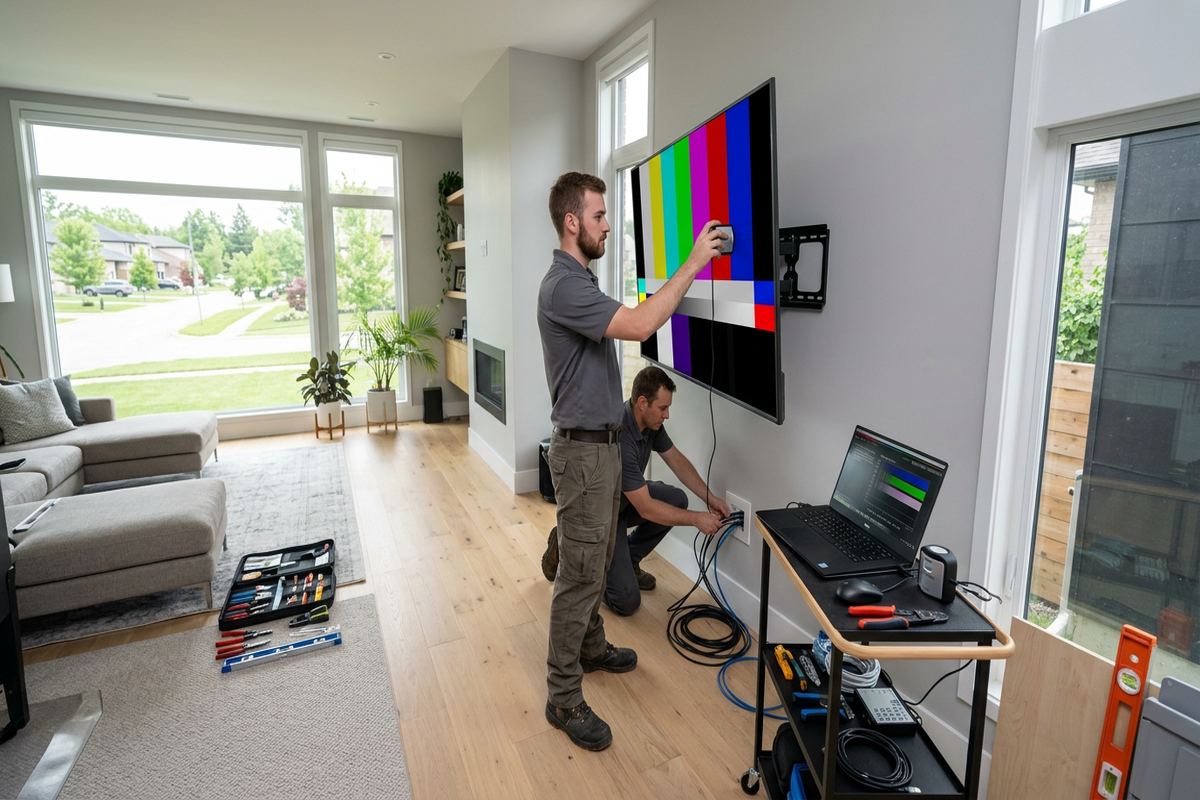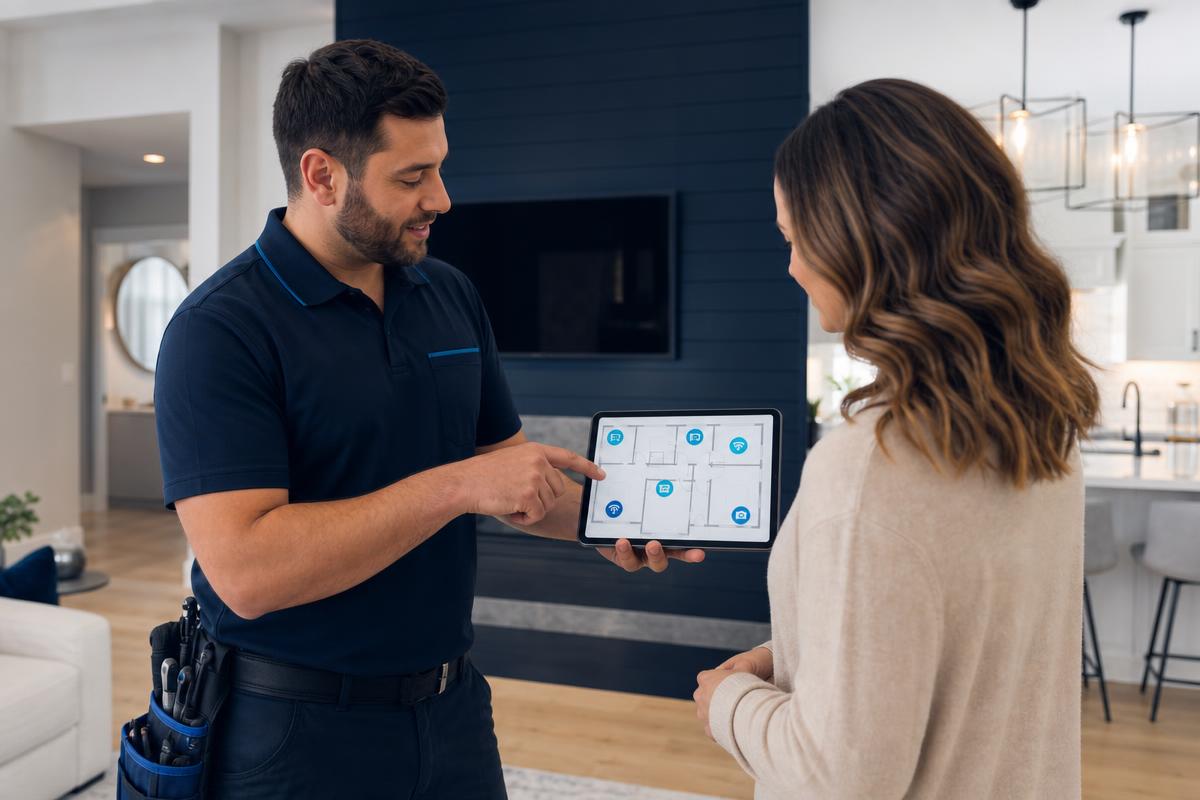
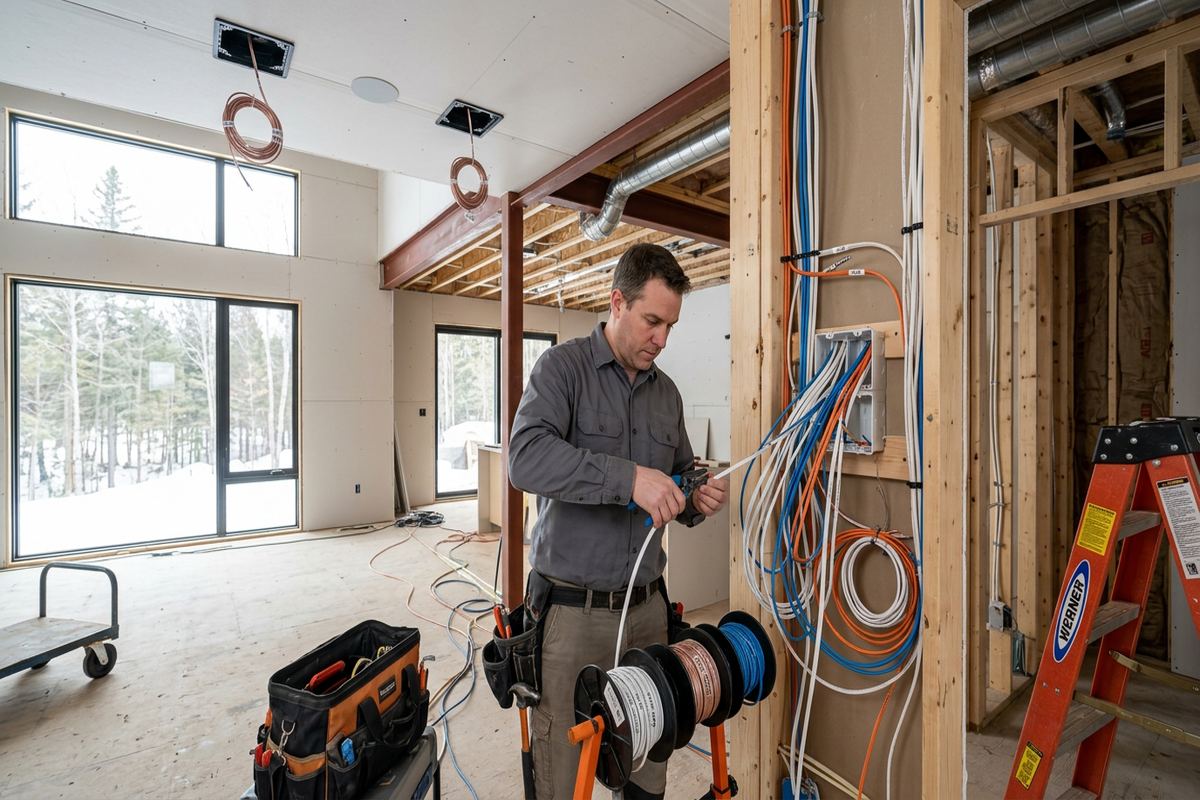
UnifiedLink installs in-ceiling speakers in Georgina homes, cottages and commercial spaces. We plan speaker positions, continuous cable routes, amplification and controls around the room layout and construction. Each project starts with a site assessment before pricing and concludes with on-site configuration, labelled wiring, customer-owned credentials and an as-built record.
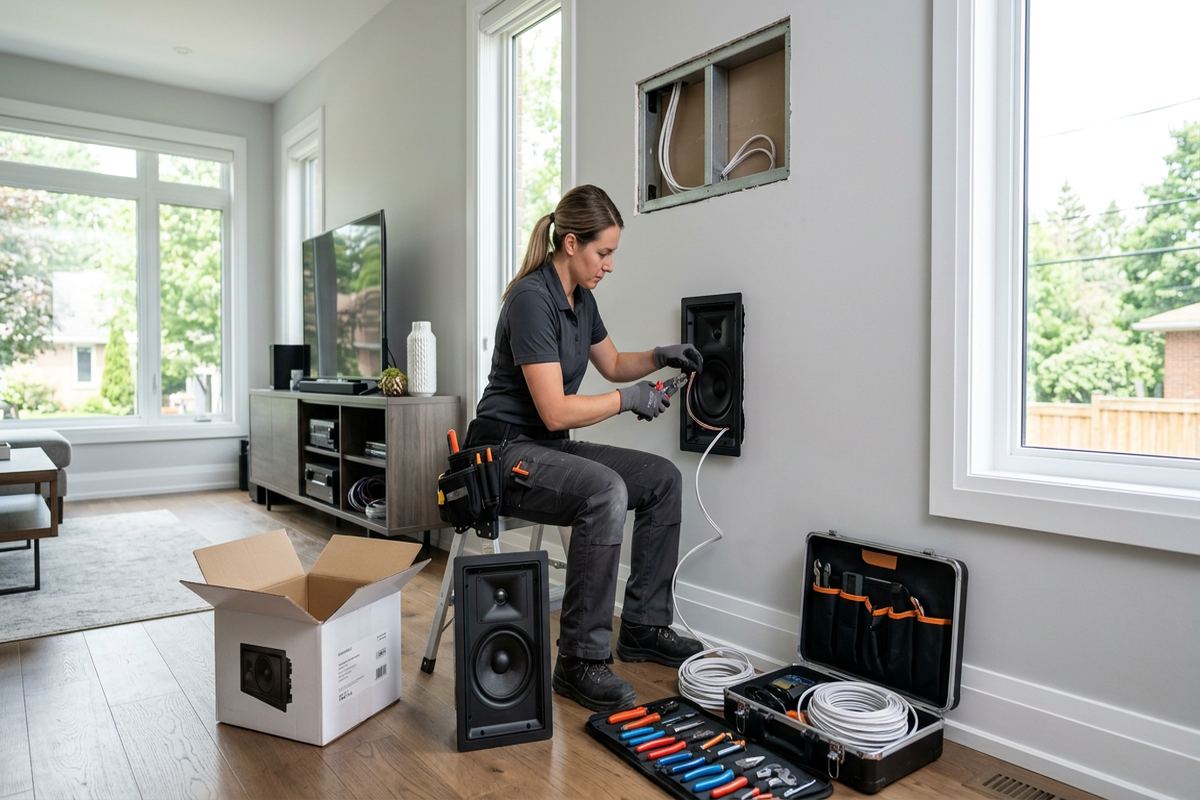
In-Ceiling Speaker Planning for Georgina Properties
A useful in-ceiling audio system begins with the room rather than a speaker catalogue. During a Georgina site assessment, we review ceiling height, listening positions, furniture, expected volume, room finishes and access above the ceiling. A kitchen used for background music needs different coverage from a media room or meeting space. We also identify likely cable routes, amplifier locations and electrical or network requirements. This planning reduces uneven volume, excessive bass near corners and speaker positions that conflict with lighting, vents, joists, plumbing or cabinetry.
Georgina properties range from Lake Simcoe cottages to year-round homes, renovated buildings and newer construction. Ceiling cavities may contain old insulation, vapour barriers, strapping or additions built with different framing methods. Before openings are cut, accessible areas are inspected and device positions are checked carefully. Where hidden conditions remain uncertain, the written scope identifies assumptions and exclusions. That approach is particularly important in cottages where renovations may have enclosed earlier wiring or where seasonal construction was converted gradually for permanent winter occupancy.
The proposed scope documents speaker quantities, models, cable routes, device placement, control method, equipment ownership and warranty. It also notes exclusions such as drywall repair, painting, electrical work or hazardous-material testing when those tasks are outside the project. Pricing follows the site assessment rather than relying on a generic per-speaker figure. Customers can then compare the intended coverage and operating method with the physical work required, including attic access, finished-ceiling fishing, rack preparation and coordination with another contractor during a renovation.
- Room-by-room listening and coverage review
- Ceiling cavity and access inspection
- Documented speaker and amplifier locations
- Written assumptions, exclusions and warranty details
- Assessment completed before project pricing
Speaker Placement and Coverage in Georgina
Correct spacing helps music sound consistent as someone moves through a room. Speakers placed too far apart create loud and quiet areas, while units installed too close to walls can emphasize certain frequencies. In Georgina kitchens and open-plan living spaces, placement must also work around pendant lights, range hoods, ceiling fans and seating zones. We consider the speaker dispersion pattern and expected listening height, then establish symmetrical positions where the structure permits. A visual layout is balanced against acoustic performance instead of forcing alignment that produces poor coverage.
Stereo pairs suit rooms with a defined listening area, but distributed audio often serves kitchens, hallways, offices or patios where occupants move around. A single stereo-input ceiling speaker can be appropriate in a small room where two separate speakers would be impractical. Larger spaces may use several speakers connected as a planned zone, subject to amplifier load and wiring design. We explain whether each area will operate independently, share a source or follow grouped controls, so daily operation is clear before holes are made in finished surfaces.
Sound transfer deserves attention in bedrooms, home offices, multi-unit buildings and commercial premises. An in-ceiling speaker energizes the ceiling cavity, and sound can travel through framing or shared voids even at moderate listening levels. Back boxes, isolation products and sensible volume limits may help, but no treatment should be presented as complete soundproofing. Georgina condo owners, tenants and landlords may also need approval before ceiling penetrations or common-area cable routes are allowed. Approval requirements and building rules should be confirmed before installation dates are finalized.
- Coverage planned around the actual listening area
- Stereo and single-speaker options for small rooms
- Independent or grouped audio zones
- Coordination with lights, fans and mechanical systems
- Practical review of sound transfer concerns
Cabling for Georgina Homes and Cottages
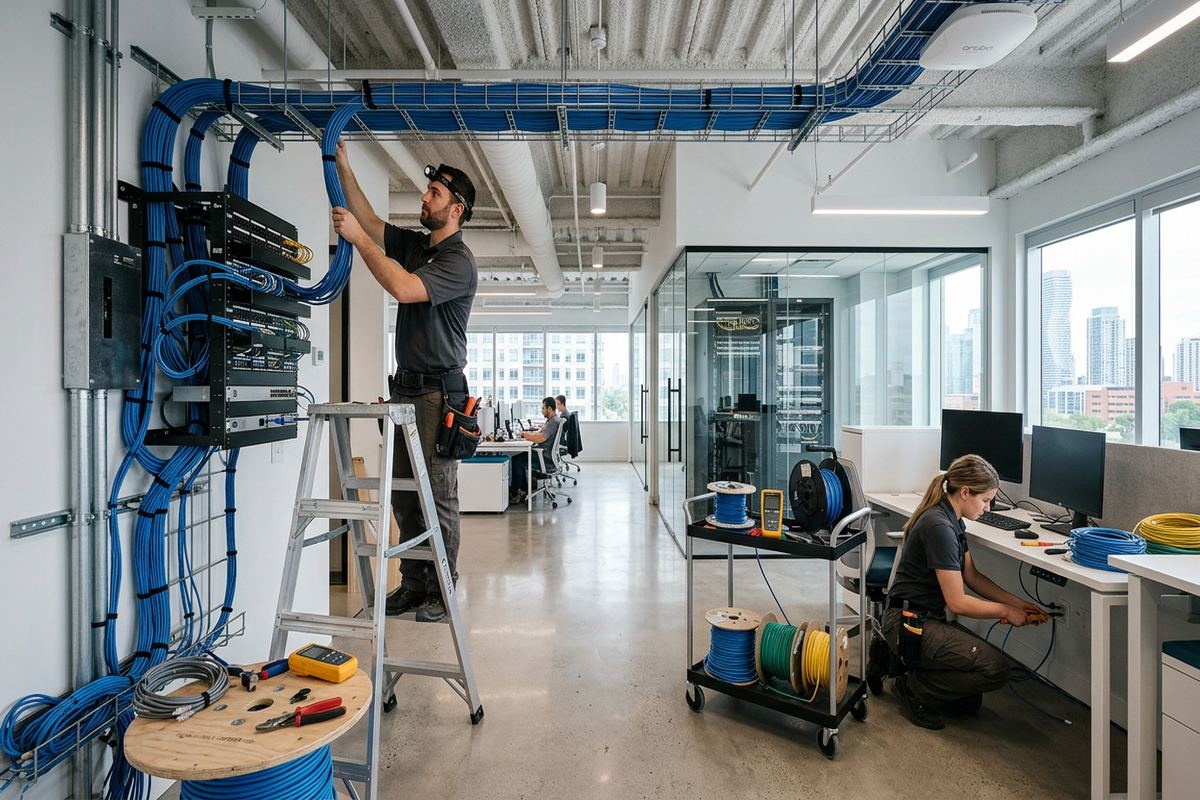
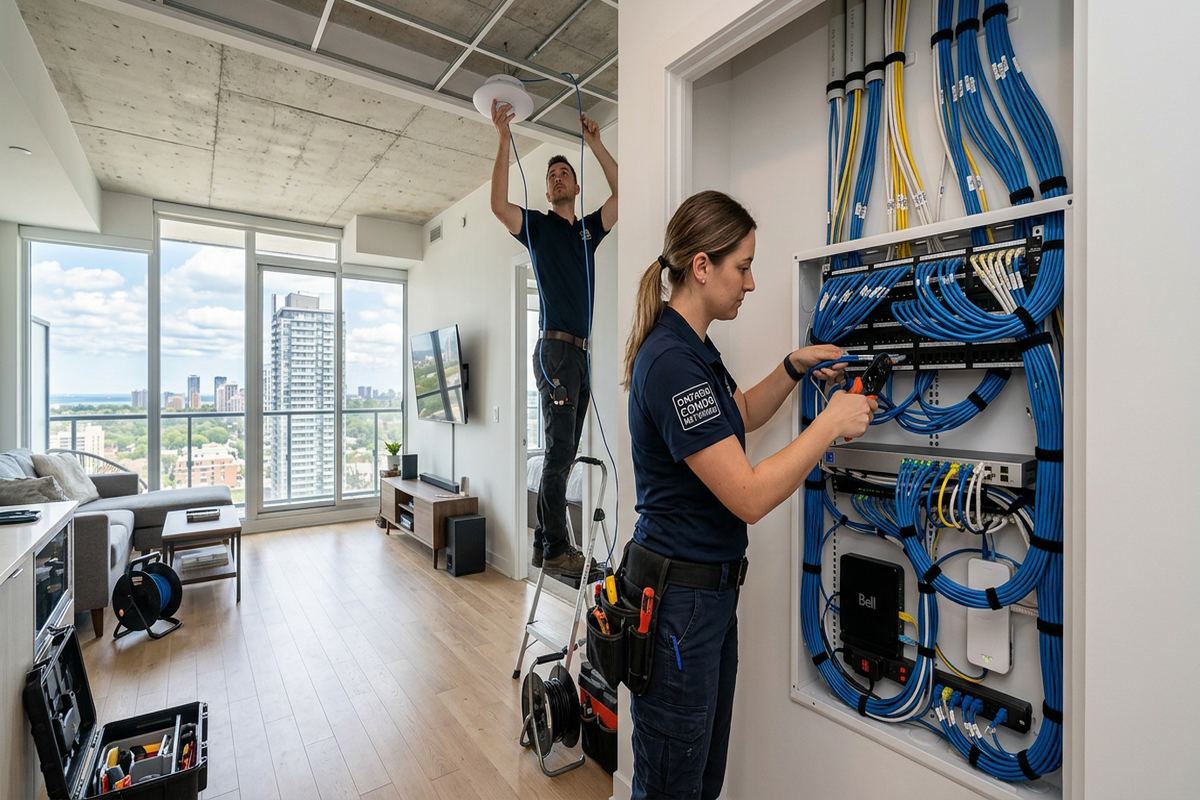
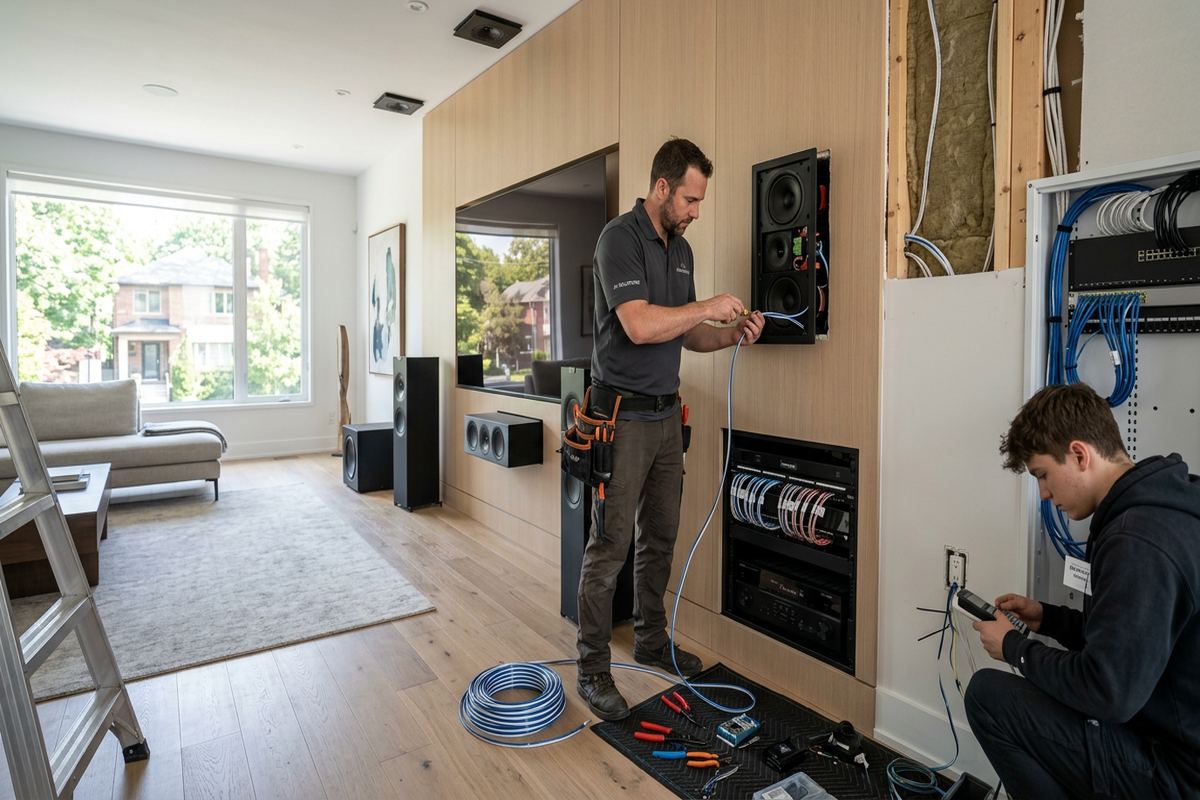
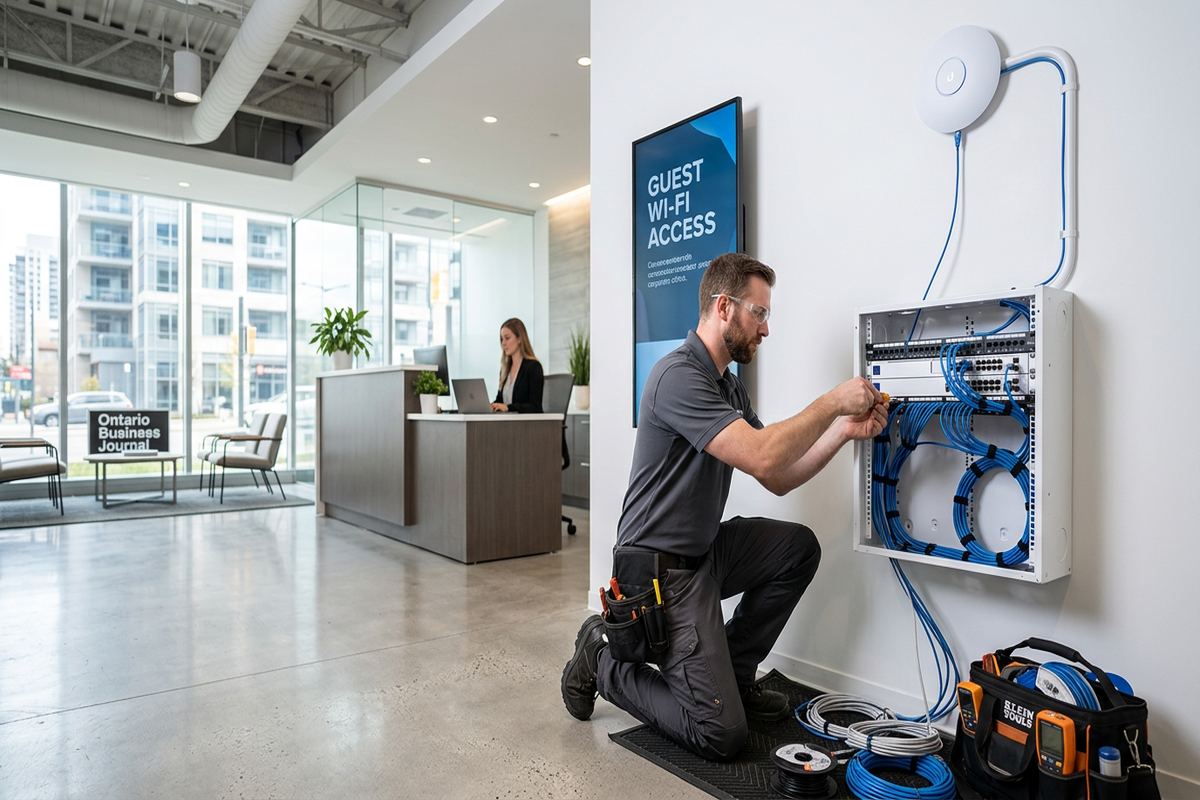
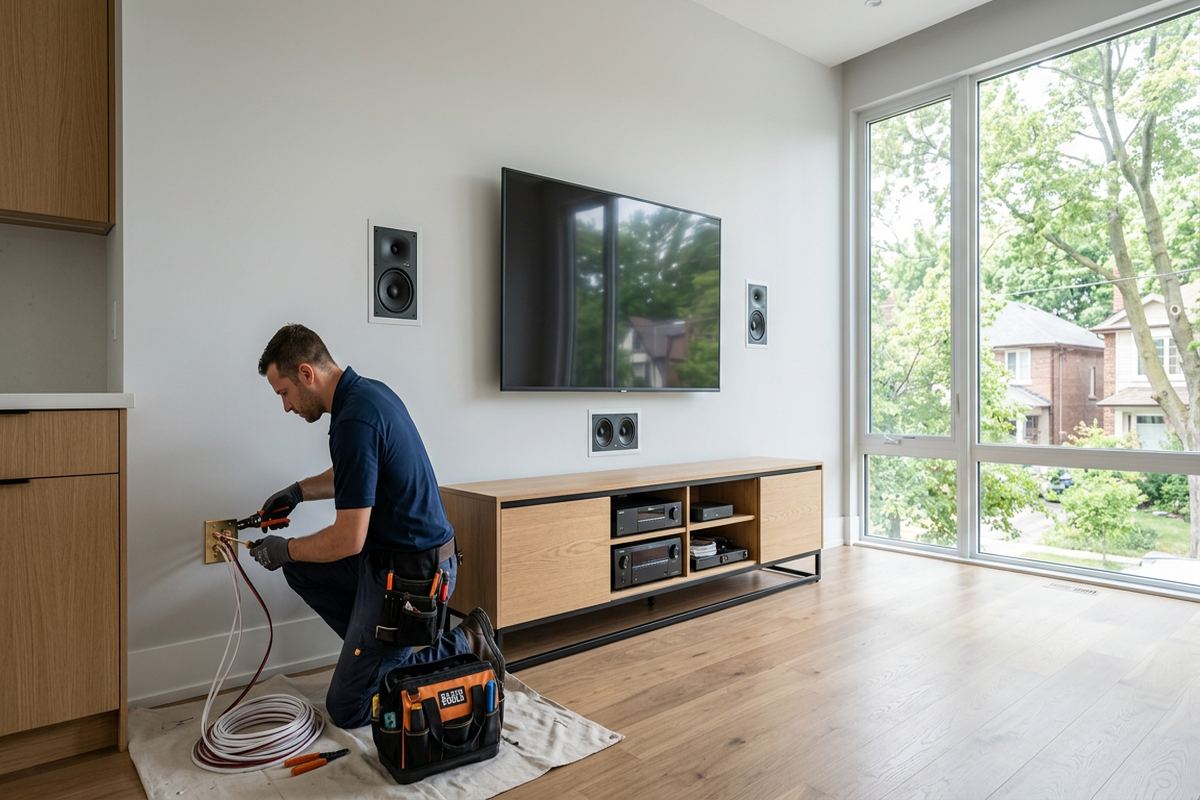
Speaker performance depends on a complete signal path, not only the visible device. UnifiedLink installs continuous labelled cable runs between speakers and the agreed termination point, avoiding concealed joins that complicate future service. Cable type and conductor size are selected for the run length, speaker load, amplifier arrangement and installation environment. Routes are kept orderly and separated from electrical conductors where required. At the equipment location, labels identify rooms or zones clearly, making it easier to test channels, change an amplifier or understand the system during later renovations.
Finished homes in Keswick and Sutton often require cable fishing through joist spaces, closets, basements or accessible attic areas. Frame construction may provide workable routes, although blocking, spray foam and tiled surfaces can limit access. Masonry walls or older additions may require surface raceway, localized access openings or a revised equipment position. We discuss these conditions before proceeding rather than assuming every wire can be hidden. If access holes are necessary, their likely locations and responsibility for patching or painting are recorded in the written project scope.
Lake Simcoe cottages and year-round Georgina homes need special attention to unheated spaces, condensation and winter temperature changes. Speaker cable routed through an attic or seasonal area must be suitable for that environment and kept away from places where ice, pests or maintenance work could damage it. Vapour barriers and exterior envelopes should not be opened casually. When a route crosses an exterior surface, penetrations require appropriate sleeves, drip management and sealing. Indoor ceiling speakers themselves are not substituted for weather-rated equipment in exposed outdoor locations.
- Continuous cable without hidden splices
- Clear labels at every equipment termination
- Routes adapted to frame or masonry construction
- Attic and seasonal-space conditions reviewed
- Exterior penetrations sealed for exposure
Georgina, Ontario
In-ceiling speaker installation in Georgina, scoped in writing first
Book a site assessment and get equipment, routes, exclusions, and warranty on paper before anything is installed.
Choosing Speakers, Amplifiers and Controls
Equipment selection should match how the space will be used. Speaker diameter, mounting depth, dispersion, moisture rating and back-box compatibility all matter, but larger equipment is not automatically more suitable. Shallow ceiling cavities may need low-profile models, while bathrooms or covered outdoor areas require products approved for their conditions. We confirm cut-out dimensions and clearances before installation. In renovation work, samples or manufacturer templates can also help customers understand the visible grille size and finish rather than choosing solely from an online specification sheet.
An amplifier must support the number of speakers, their impedance and the required zoning arrangement. Connecting too many speakers to an unsuitable output can cause unreliable operation or equipment damage. Depending on the design, volume may be managed by an app, wall control, central interface or source device. We document which components depend on the local network and which functions remain available without internet access. This distinction is useful for Georgina cottages, where remote monitoring and other connected systems may share the same network but connectivity can vary by property.
Source planning covers televisions, streaming services, local media, microphones and business audio where applicable. A television connection may require an audio return channel, optical link or dedicated interface, while commercial background music must use sources and content authorized for that setting. We do not assume that every existing receiver supports multi-room operation. During assessment, model numbers and available outputs are checked when possible. The resulting design identifies reused equipment and new equipment separately, including who owns supplied hardware and what warranty applies to each portion.
- Speakers selected for depth and room conditions
- Amplifier loading checked before connection
- App, wall-control or source-based operation
- Network dependencies explained in writing
- Existing equipment assessed for compatibility
Installation in Finished and Renovated Georgina Buildings
Installation methods change significantly between open framing and completed ceilings. During a Georgina renovation, cable and pre-construction brackets can be placed before insulation and drywall, provided speaker positions are coordinated with reflected ceiling plans and mechanical trades. In a finished room, each proposed opening is checked with available detection methods and small exploratory steps where appropriate. No scanner can identify every concealed condition, so inaccessible plumbing, blocking or wiring may still require a position adjustment. Customers are consulted when a material change affects alignment, appearance or coverage.
Older homes and converted cottages can contain plaster, lath, layered drywall or irregular framing. These surfaces require slower cutting and may be more prone to localized cracking than modern gypsum board. Masonry construction can also shift the preferred route toward a basement, service chase or discreet raceway. In newer Georgina houses, engineered joists and dense mechanical layouts may restrict drilling even when the ceiling appears open. Structural members are not altered without an appropriate plan, and fire separations or rated assemblies are treated as constraints rather than ordinary cavities.
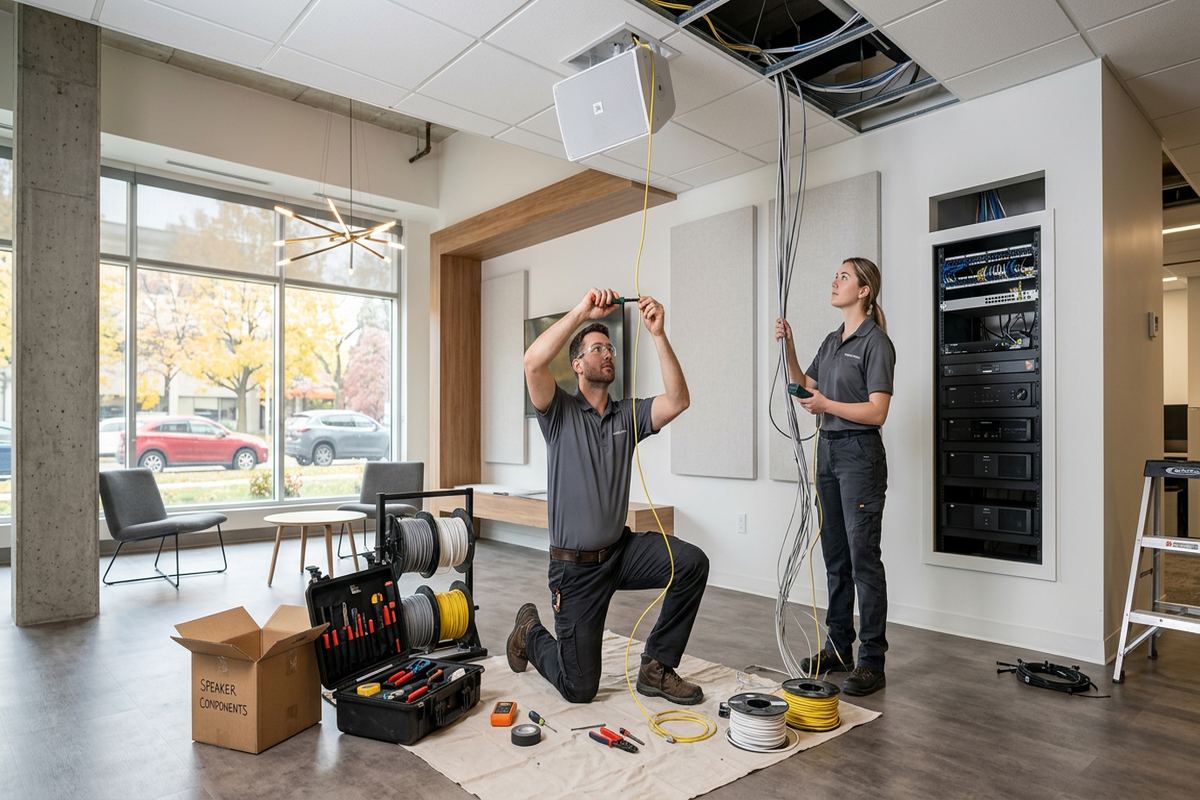
Commercial strips and industrial units around Georgina introduce different conditions, including suspended ceilings, open decks, steel framing and shared service spaces. Speaker supports, cable pathways and plenum requirements are reviewed for the building type. Work may need coordination with a landlord, property manager or other trades, especially where access occurs above neighbouring premises or outside regular operating periods. In leased spaces, the tenant should confirm alteration and restoration obligations. The scope can distinguish permanent building cabling from customer-owned amplifiers, sources and control hardware.
- Pre-wire coordination before insulation and drywall
- Careful cutting in finished ceiling surfaces
- Methods suited to plaster, masonry or framing
- Commercial ceiling and pathway review
- Landlord and property-manager coordination
Audio Zones for Georgina Living and Workspaces
A zone is an area that shares source and volume control, but useful zoning follows daily routines. A Georgina homeowner may group a kitchen and dining room while keeping bedrooms independent. A cottage may need simple controls that visiting family members can understand without changing a central configuration. We map each proposed zone, determine whether it needs stereo or background coverage and identify where control will occur. The design also considers what happens when different users request separate sources and whether the amplifier can support those sessions simultaneously.
Businesses in Keswick, Jackson's Point or Pefferlaw may need steady background audio across a reception area, dining space, showroom or office. Coverage should remain even enough that staff do not raise one speaker excessively to reach a distant area. Separate zones can help keep customer-facing spaces independent from staff rooms or meeting areas. Where paging, emergency communication or regulated life-safety systems are present, their requirements must be reviewed separately. General audio speakers should not be assumed to replace equipment that serves a code-mandated notification function.
System controls should be straightforward to recover after a router change, power interruption or source update. At handover, UnifiedLink configures the system on site and places accounts under the customer's own credentials where account-based services are involved. The as-built record identifies speaker zones, cable destinations and key equipment connections. For seasonal properties in Virginia or Udora, clear records are useful when a caretaker, owner or future technician needs to understand the system. Remote access is configured only where supported and requested; it does not replace physical troubleshooting.
- Zones based on actual room use
- Independent volume and source options
- Balanced commercial background-audio coverage
- Customer-owned accounts and credentials
- As-built record for future service
Winter, Moisture and Exterior Audio Considerations
Georgina winters create conditions that indoor audio planning cannot ignore, especially near Lake Simcoe or in seasonal buildings. Freeze-thaw cycles can affect exterior penetrations, mounting surfaces and seals, while condensation may develop where warm indoor air reaches a cold cavity. A ceiling speaker inside a heated room still needs an installation that respects insulation and the air barrier above it. We avoid treating an attic opening as a simple interior cut and discuss enclosure, vapour-barrier and insulation details when they affect the proposed speaker position.
Covered porches, soffits and outdoor entertaining areas require equipment specifically rated for the expected moisture and temperature exposure. The word “covered” does not make an indoor speaker suitable outdoors, because wind-driven precipitation and condensation can still reach it. Mounting hardware should suit the substrate, whether wood framing, masonry or another exterior finish. Cable entries require exterior-grade sealing arranged to shed water rather than trap it. In Georgina, periodic inspection is sensible because seasonal movement can expose failed sealant or loosen hardware over time.
Seasonal shutdown planning should account for amplifiers, network equipment and remote monitoring systems housed at the property. Speakers are passive in many designs, but connected controls and amplifiers still depend on suitable temperature, power and network conditions. We identify which components should remain energized and which manufacturer operating limits apply. Where audio shares a rack or cabinet with security and networking hardware, ventilation and service access are planned together. This provides one organized equipment location without suggesting that an entertainment system performs security monitoring or replaces environmental sensors.
- Winter exposure considered during route planning
- Weather-rated products for exterior locations
- Sealed penetrations arranged to shed water
- Vapour barrier and insulation kept in view
- Shared equipment areas planned for ventilation
Georgina Project Process and Handover
Every project begins with a site assessment before pricing. The visit confirms room dimensions, ceiling construction, access, speaker positions, cable routes, control expectations and equipment location. Assessment timing depends on the service and travel distance within Georgina and surrounding communities. Requests sent during business hours are answered the same day; after-hours requests are answered the next business day. That response commitment concerns the request itself, not a guaranteed installation or site-visit time. Any approvals, renovation schedules or special-access arrangements are identified before work is booked.
Following assessment, the customer receives a written scope covering equipment, cable routes, device placement, exclusions, equipment ownership and warranty. During installation, cables are run continuously and labelled, openings are cut at confirmed positions, speakers are secured and terminations are tested. One accountable contractor coordinates the low-voltage audio work, including connections to related network or display equipment included in scope. If hidden site conditions require a change, the issue is explained before additional work proceeds rather than being concealed behind a completed ceiling or equipment cabinet.
Handover includes on-site configuration and practical instruction for normal operation. The customer receives their own credentials for supported apps or services, not an installer-controlled account. An as-built record documents zones, cable labels, speaker positions and principal connections so future service does not begin with guesswork. We test playback and controls across the agreed areas and review any limitations, such as internet-dependent sources or equipment retained from an earlier system. This closing process applies to Georgina homes, cottages, leased spaces and owner-occupied commercial properties alike.
- Same-day reply during business hours
- Written scope before installation begins
- One accountable low-voltage contractor
- On-site testing and configuration
- Customer credentials and as-built documentation
Georgina neighbourhoods we cover
- Keswick
- Sutton
- Jackson's Point
- Pefferlaw
- Udora
- Virginia
In-ceiling speaker installation in Georgina — common questions
Can you install speakers in a finished Georgina home?
Yes, when workable cable routes and safe ceiling locations are available. Finished installation may use attic, basement, closet or joist-space access. Plaster, blocking, spray foam, plumbing and electrical wiring can affect the route. A Georgina site assessment identifies likely access points and whether localized openings, surface raceway or a revised speaker position should be included in the written scope.
Will in-ceiling speakers work in my Lake Simcoe cottage?
They can, provided the equipment and wiring suit the building's seasonal conditions. We review attic temperatures, insulation, vapour barriers, condensation risks and whether the property remains heated through winter. Indoor speakers are not appropriate for exposed outdoor locations. For a Georgina cottage, connected amplifiers and controls must also operate within their specified temperature, power and network requirements.
How many ceiling speakers does my room need?
The quantity depends on room dimensions, ceiling height, speaker dispersion, listening positions, expected volume and whether the room needs stereo or general background coverage. Open-plan Georgina homes often require several coordinated positions rather than one loud pair. We determine the layout during assessment, while accounting for lights, fans, vents, joists, cabinetry and other features that limit usable ceiling locations.
Do I need approval from my condo board or landlord?
Possibly. Condo corporations, landlords and commercial property managers may control ceiling penetrations, cable routes, work hours, insurance documentation and restoration requirements. Shared ceiling voids or fire-rated assemblies can introduce additional restrictions. Georgina tenants and condo owners should obtain written approval before installation. UnifiedLink can provide the proposed low-voltage scope and device locations for review, but the property authority makes the approval decision.
Can different rooms play different audio?
Yes, if the amplifier, sources and control platform are designed for independent zones. A Georgina home might group the kitchen and dining area while keeping bedrooms or outdoor spaces separate. Different-source playback depends on the selected equipment and service accounts. The written design identifies each zone, its speakers, available sources and where users will control volume or grouping.
What do I receive when installation is complete?
UnifiedLink tests the agreed speakers, zones, sources and controls on site. You receive the supported system credentials in your own name and an as-built record showing speaker locations, cable labels, zone assignments and principal equipment connections. For Georgina cottages or businesses with changing occupants, this documentation helps owners, caretakers and future technicians understand the installation without tracing every concealed cable again.
Coverage in Georgina is confirmed against the address before we quote. See everything we install in Georgina or the province-wide in-ceiling speaker installation page.